
As the 2026 Masters gets underway, golf arrives in a position few would have predicted five years ago. A sport widely seen as exclusive, aging, and slow to change has posted eight consecutive years of participation growth, record viewership, and a commercial boom. For brands evaluating where to invest, the data tells a clear story: golf's audience is large, growing, affluent, and — critically — deeply engaged.
Participation has reached an all-time high
In 2025, 48.1 million Americans played golf in some form — an all-time record and a 41% increase over pre-pandemic levels. The NGF projects that number will cross 50 million by year-end 2026.
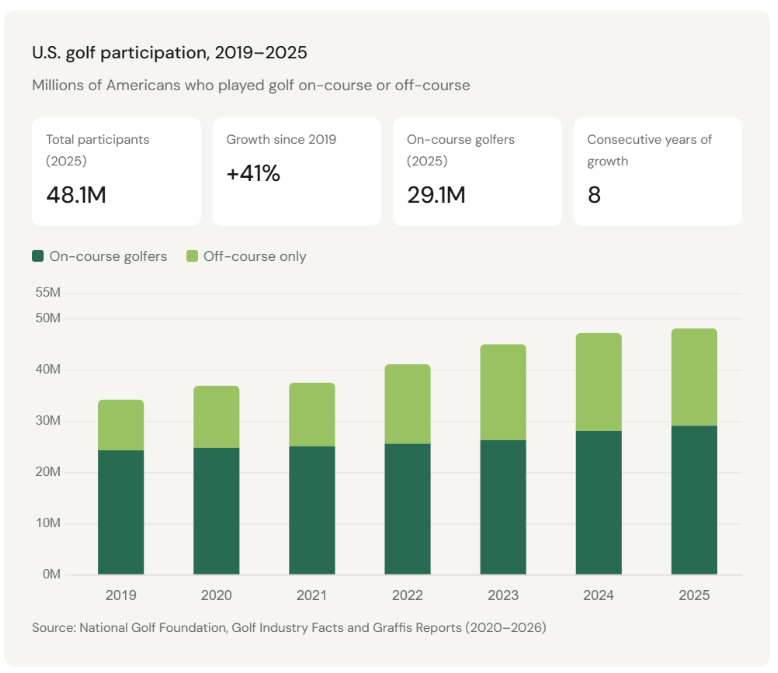
The composition of golf's participant base has also shifted. Women now represent 28% of on-course golfers and have driven roughly 60% of net gains since 2019. People of color account for 26%, up from 8% in 1990. Junior participation has surged 58%. Golf's audience isn’t a model of diversity — but it is no longer the narrow demographic it once was.
Viewership and commercial momentum
The 2025 Masters final round drew nearly 13 million viewers on CBS, the largest golf audience in seven years. CBS averaged nearly 3 million viewers per PGA Tour broadcast for the full season, up 17% year-over-year, and early 2026 numbers have been even stronger. Commercially, fourteen sponsorship deals worth $400 million were signed in a single recent quarter, pushing total Tour commitments to $4 billion over the next decade.
What makes golf different: the playing-watching connection
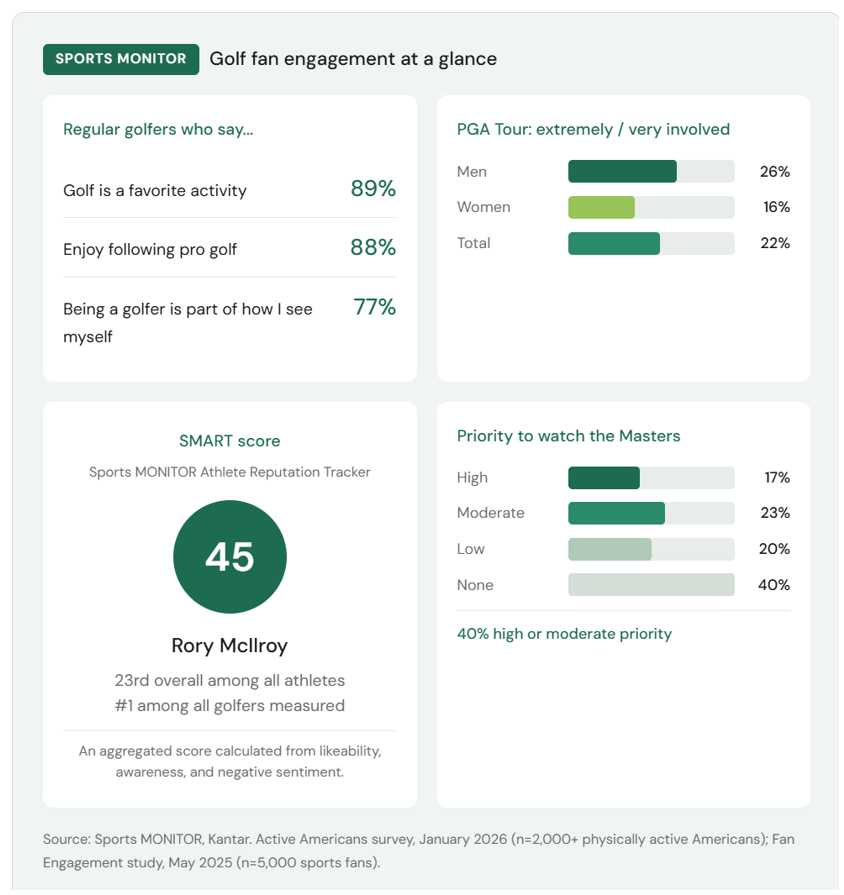
What distinguishes golf as a brand platform is the tight connection between playing and watching. Sports MONITOR data shows that among regular golfers, 89% say golf is one of their favorite activities, 88% enjoy following professional golf, and 77% say being a golfer is part of how they see themselves. In most major sports, participation and fandom are separate populations. In golf, they overlap almost entirely.
That overlap drives spending. The U.S. golf industry generates roughly $100 billion annually, driven largely by participants rather than spectators. Few sports offer this combination of audience scale — nearly 50 million — and consumer intent.
Sports MONITOR Golf engagement at a glance
The Masters: where scarcity creates value
The Masters takes everything that makes golf distinctive — engaged participants, affluent consumers, concentrated attention — and distills it into four days in April. Forty percent of sports fans place a high or moderate priority on watching it, making it one of the highest-priority single events Sports MONITOR measures.
Augusta's commercial model reflects this. A small group of official sponsors, no on-course signage, roughly four minutes of advertising per hour versus the Tour's typical 18-to-20, and merchandise available only on site. The result is an environment where brand association carries more weight and attention is more concentrated.
Brand implications
Golf's audience has changed — and so has what golf means to them. The sport's participant base is younger, more female, and more diverse than it was five years ago. But the shift isn't just demographic. For regular golfers, the sport functions as an identity marker — 77% say being a golfer is part of how they see themselves. Brands that treat golf solely as a media buy may underestimate its value. Sports MONITOR tracks how fan attitudes and cultural currents shape the meaning of sports properties over time, helping brands align with what golf represents to its audience, not just who that audience is.
Explore what Sports MONITOR can do for your brand
Sports MONITOR helps brands understand the fan landscape — from engagement and identity to athlete reputation, event priority, and the cultural forces shaping how people connect with sports. It's the strategic foundation for smarter decisions about where and how your brand shows up in sports.
To learn more, contact Ryan.McConnell@kantar.com