Olympic buzz is reaching new heights, fueled by record-breaking viewership and a social media boom at Paris 2024. The Winter Olympics in 2026 will build on this momentum, providing the pinnacle of elite performance for many sports. With global sports viewership projected to surpass $320 billion by 2033, the business of fandom has never been stronger. But with tighter marketing budgets and tougher battles for attention, is Olympic activity really worth the investment?
What’s in it for brands?
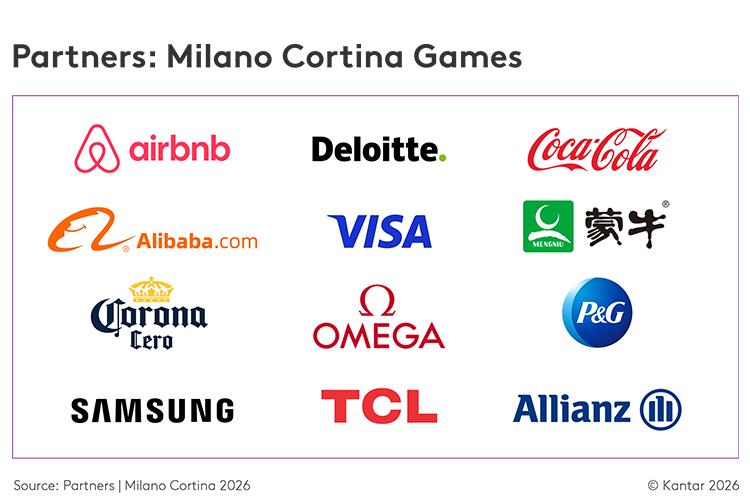
A huge, diverse and highly engaged audience. The eclectic mix of global partners, though varied in their strategies and sectors, will be after the same thing: enhancing positive perceptions in the eyes of audiences. The Olympics also serves as an opportunity for local brands to take the limelight. Italy’s cast includes many well-known local brands, like utilities supplier ENEL, banking group Intesa Sanpaolo and automotive manufacturer Stellantis, (makers of FIAT, Alfa Romeo and Maserati), who will benefit from visibility on a global stage. According to Kantar’s Media Reactions study, campaigns are seven times more impactful among more receptive audiences, giving these brands a powerful platform to predispose more people.
But brands don’t necessarily need to spend big to show up with impact. Two stand-out performers at the Paris 2024 games were global partner Visa and local partner Decathlon. Visa avoided traditional advertising buys, but managed to capture high visibility by investing in street art across Paris, generating 1.2 billion potential impressions. Decathlon sponsored volunteer uniforms which led to viral storytelling moments, as well as launching an immersive playground in La Vilette with live DJ sets, sports demos, athlete interviews and merchandise.
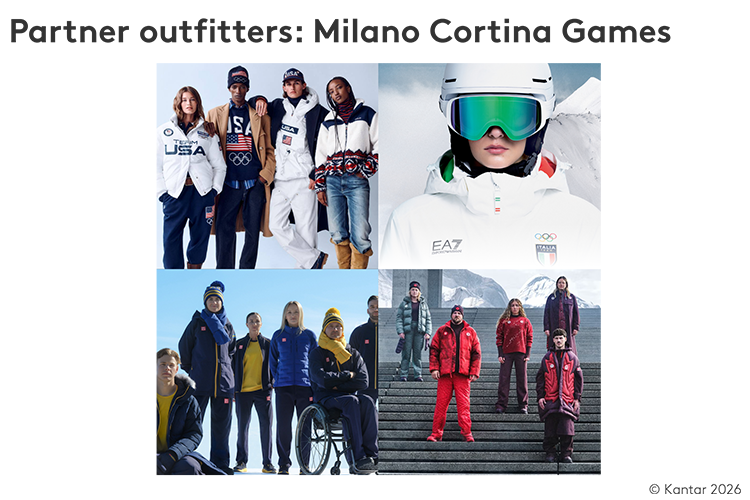
Then there’s apparel sponsorship, offering brands an elevated stage to showcase their creativity and innovative design. It also provides a chance to reinforce what they stand for: Ralph Lauren highlights its heritage and Americana elegance, Armani emphasizes refined Italian craftsmanship, lululemon underscores its performance driven aesthetic, and Uniqlo showcases its functional, technical design capabilities.
Beyond Salience
For some brands, the Olympics is all about awareness, reminding people of their presence and staying top of mind. But the brands winning big are building more than just Salience. The Olympic Games also offers a platform for brands to tell authentic stories and connect with audiences in more meaningful ways. The strongest brands can communicate their functional benefits, but also create emotional connections - an opportunity to earn trust, pride and cultural currency.
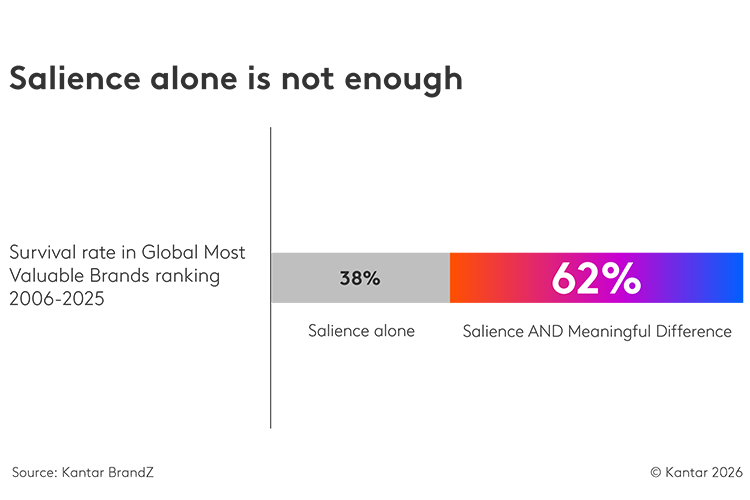
This is critical to long-term brand growth. Salience alone will only carry brands so far. In fact, looking at Kantar BrandZ’s Top 100 Most Valuable Global Brands over the last 20 years, those that relied on Salience alone fared much worse versus those that had also built Meaningful Difference. While broad awareness is important, without clear values and benefits that underpin fame, brands are vulnerable to disruption from competitors or from market forces.
Real people, real stories
Paris 2024 was the first games to lift restrictions on athlete brand endorsements and since then, athlete sponsorships have sky-rocketed. In fact, the top 10 highest paid athletes globally earned over a billion dollars from off-field deals in 2025. Athletes bring built-in credibility, performance drama and emotional investment for fans, meeting young fans where they are on social platforms and creating rich sports narratives.
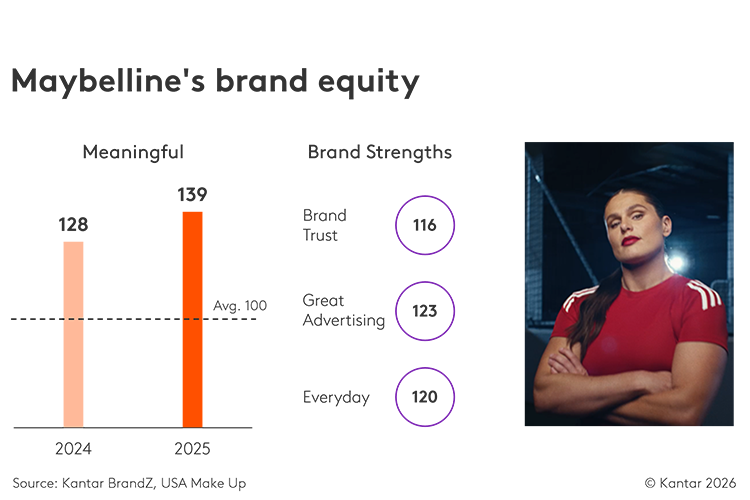
Ilona Maher was one athlete that showed the world the power of authentic athlete stories and since the games, she’s grown both her following and marketing value significantly. A partnership with Maybelline demonstrates what good looks like. Maher’s signature bold red lipstick is a genuine part of her on and off-field identity and her values around body positivity, confidence and breaking stereotypes around female athletes align with Maybelline’s message around courageous self-expression and inclusivity. In recent years, BrandZ data shows Maybelline as an increasingly Meaningful and trusted brand that fits well into peoples’ everyday lives.
The Winter Olympics promises some equally powerful voices from the comeback of decorated alpine skier Lindsey Vonn, defying the stigma around age and performance, to Eileen Gu, bridging sport, fashion and culture. One narrative already building Olympic hype is the buzz around fictional ice hockey romance show, Heated Rivalry, demonstrating how cultural storytelling can reshape category perceptions. Its influence is expanding hockey’s audience especially among women and giving real life athletes new relevance. With BrandZ data showing the NHL lacks strong definition in peoples’ minds, this pop culture momentum highlights a clear opportunity for marketers to build sharper, more resonant brand meaning by leaning into culturally powered narratives.
Presence with purpose
As well as advertising presence, marketing teams will also need to consider how their brands show up physically at the Winter Games. While we tend to think about advertising as playing the biggest role in building brands, paid media in fact only accounts for around 25% of brand perceptions. The remaining 75% is delivered by other interactions, with direct experience and word of mouth making up half of that. Delivering on your brand promise at every interaction is how brands earn trust and keep customers beyond the first purchase.
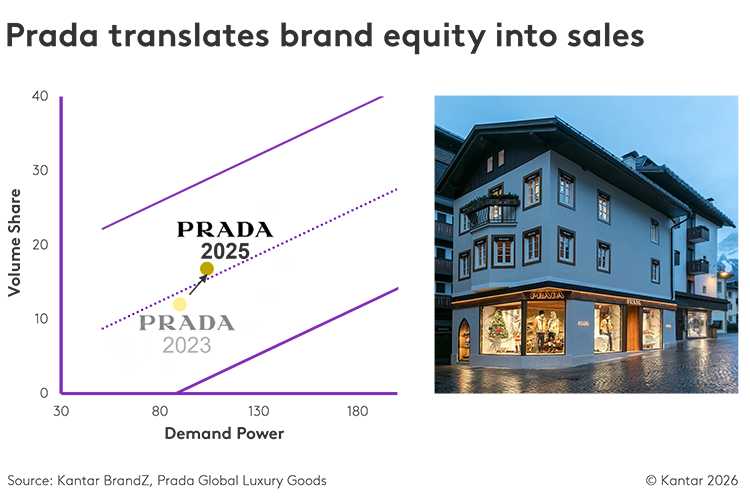
Prada has just opened its first boutique on Corso Italia, a prime shopping street overlooking the Dolomites. Spanning three floors with a terrace looking out on the mountains, it promises to deliver an immersive luxury experience for affluent Olympic tourists. The move reflects Prada’s understanding of the importance of being present in key cultural moments and in recent years, the brand has been able to convert more of its brand equity into sales by being more present in consumers’ lives.
Takeaways for brands
In a world where budgets are tightening and competition for attention is fiercer than ever, brands need to prioritize activity that not only shows up in the moment, but builds lasting, meaningful impact beyond it:
- Build beyond Salience: show consumers how you will meet their needs and what makes you different from others
- Tell real stories: drive lasting connections with authentic storytelling rooted in brand identity
- Show up where it matters: create experiences that live and breathe the brand
Find more data-driven insights in the 20th anniversary edition of Kantar BrandZ’s Most Valuable Global Brands Report now available at www.kantar.com/campaigns/brandz/global
For a quick read on a brand’s performance compared to competitors in a specific category, Kantar’s free interactive tool, BrandSnapshot powered by BrandZ, provides intelligence on 15,000 brands. Find out more here.