The 2026 FIFA World Cup was more than the biggest sporting event in history. It was a 39-day laboratory for understanding how brands compete for attention, build emotional connections, and create cultural relevance.
Kantar studied sponsor performance, creative effectiveness, creator content, consumer reactions, and brand outcomes throughout the tournament. The findings suggest that participating is one thing, but winning is another. The brands that stood out built programs that behaved more like culture and less like advertising. They weren't simply buying sponsorship rights. They were creating a meaningful role in the fan experience.
As marketers look ahead to Super Bowl LXI, the 2027 FIFA Women's World Cup, LA28, and the next generation of tent-pole events, five lessons stand out.
Lesson 1: Sponsorship rights provide a platform but don’t guarantee success
FIFA generated approximately $2.7 billion in sponsorship and marketing-rights revenue during the 2023-2026 World Cup cycle, with corporate partners investing hundreds of millions of dollars for the right to participate. The scale of the opportunity surrounding the tournament was larger still: brands spent an estimated $1.4 billion on World Cup-related advertising in the US alone, with nearly 7,000 brands advertising around the event.
Given the scale of that investment, one of the most common questions marketers ask is whether sponsorship remains worth the cost. Kantar's data suggests the answer is far from straightforward. Across the 11 official partners and sponsors we tracked during the tournament, we saw almost no material increase in sponsorship awareness over the course of the event. In other words, it is entirely possible to spend millions of dollars on sponsorship rights and for consumers not to notice.
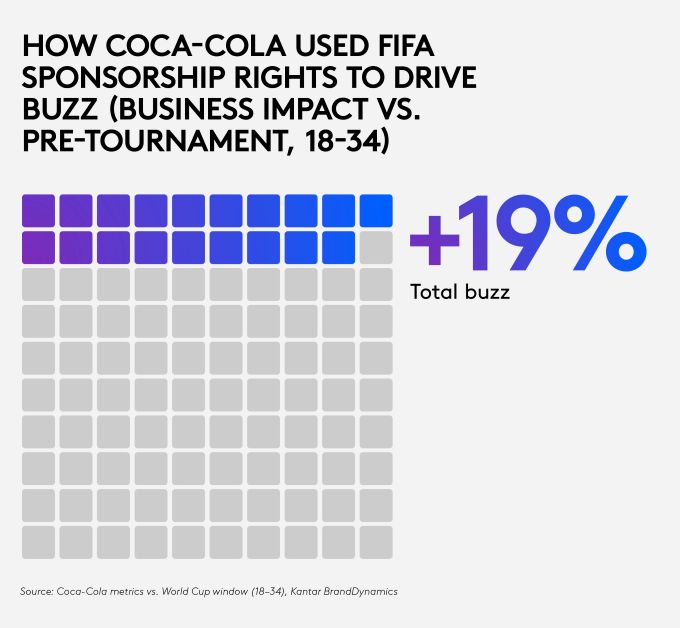
Coca-Cola shows what those rights are worth when a brand puts them to work.
What matters, and what consumers pay attention to, is a well-activated campaign where the brand fits with the event. Coca-Cola, which has been a FIFA partner since the 1970s, exemplifies how to successfully activate against a World Cup sponsorship. The FIFA World Cup Trophy Tour built anticipation months before the first match, and the brand carried that idea across advertising, social, creators, retail and experiential.
The results speak for themselves. Coca-Cola's World Cup activation generated gains in buzz, brand health and sales, helping the company deliver its strongest volume growth in 17 years outside of the post-COVID recovery period.
What this means for your next event: Ensure a strong activation plan to maximize your sports sponsorship deal. A sponsorship with no activation plan is a sunk cost, not a marketing strategy.
Lesson 2: Non-sponsors can compete
A generation ago, sponsorship rights largely decided the winners. That is no longer the case.
Kantar found no meaningful difference in creative effectiveness between sponsors and non-sponsors, suggesting that breakthrough creativity and disciplined activation matter more than sponsorship status.
Nike provides one of the strongest examples. Despite lacking official FIFA rights, Nike launched Rip the Script, a six-minute Wieden+Kennedy film one week before the June 11 opener and entered the tournament with the highest buzz of any brand Kantar tracked at 75% among 18-34s. The campaign was built to be clipped, remixed, and debated, rather than to run as a linear spot, driving Nike's social media awareness throughout the group stage.
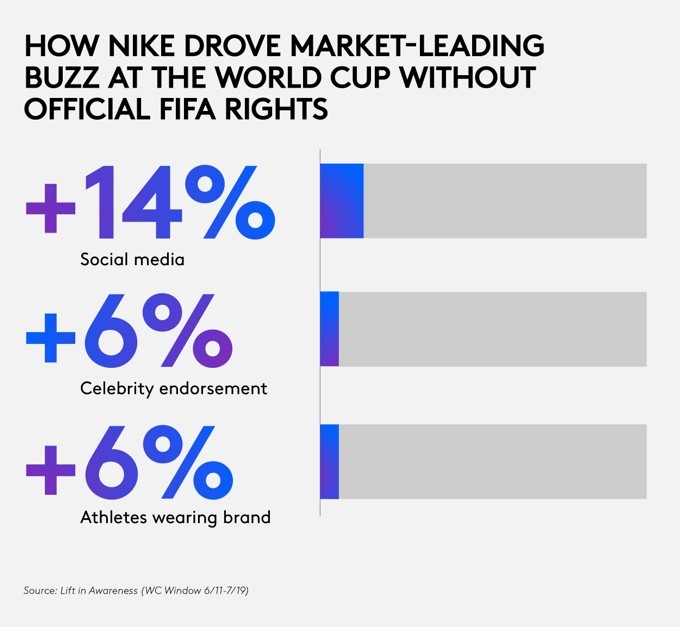
What this mean for your next event: If you opt not to be a sponsor, don't let a "no sponsorship, no plan" mindset rule out big events. Break through by engaging with fans and becoming part of the conversation surrounding the tournament.
Lesson 3: Creators work best when they strengthen a bigger story
Social drove the greatest brand impact of any touchpoint Kantar measured and kept generating momentum after the final whistle, long after TV’s contribution had faded.
However, marketers should be careful not to confuse engagement with effectiveness. Kantar analyzed more than 15,000 creator assets and found that engagement metrics aligned with brand-building potential roughly one-third of the time. Among the highest-engaged creator posts, fewer than one in five showed strong potential to build the brand. Around one in eight showed strong short-term sales potential.
Lay's avoided that trap by using creators to extend its Will Ferrell platform into social rather than running social as a separate idea. Kantar placed the program in the top tier of all creator content evaluated.
Speed mattered as much as structure. When the Tartan Army arrived in Boston for Scotland's group-stage matches, the reception was warm enough that the city moved to establish a sister-city relationship with Glasgow mid-tournament. Miller Lite responded nimbly with "Restock the Scots," keeping Scottish fans supplied through the next match. The response ranked in the top 16% for enjoyment.
What this means for your next event: Select creators based on brand-lift potential, not follower count or engagement rate. A brief that opens with "extend this platform" will beat one that opens with "get us views," and you can measure the difference before you sign the contract.
Lesson 4: Great marketing fundamentals still win
For all the discussion around AI, creators and emerging platforms, the World Cup reinforced a simple truth: great marketing fundamentals remain the biggest competitive advantage.
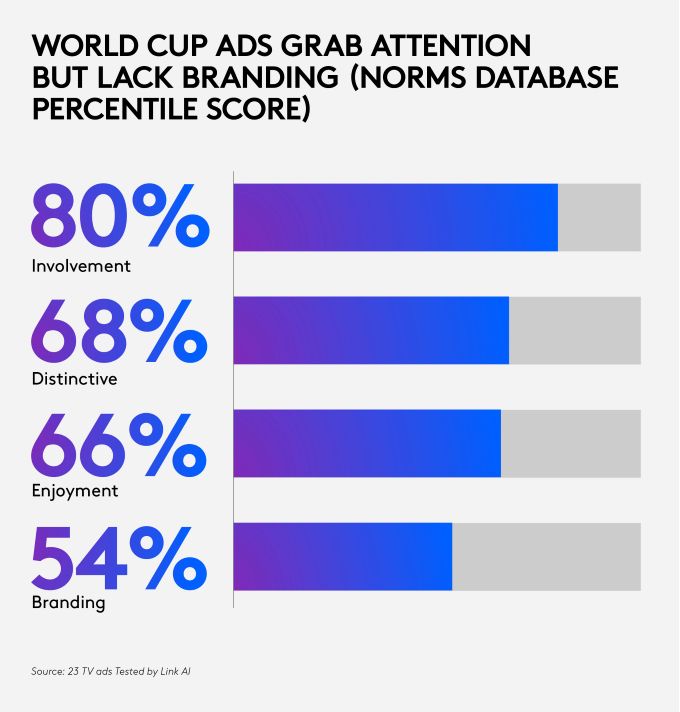
Kantar's evaluation found the average World Cup ad grabbed attention, scoring well above norms for involvement, enjoyment and distinctiveness. Yet many struggled on a more basic measure: branding. Consumers often remembered the advertisement but failed to remember who it was for.
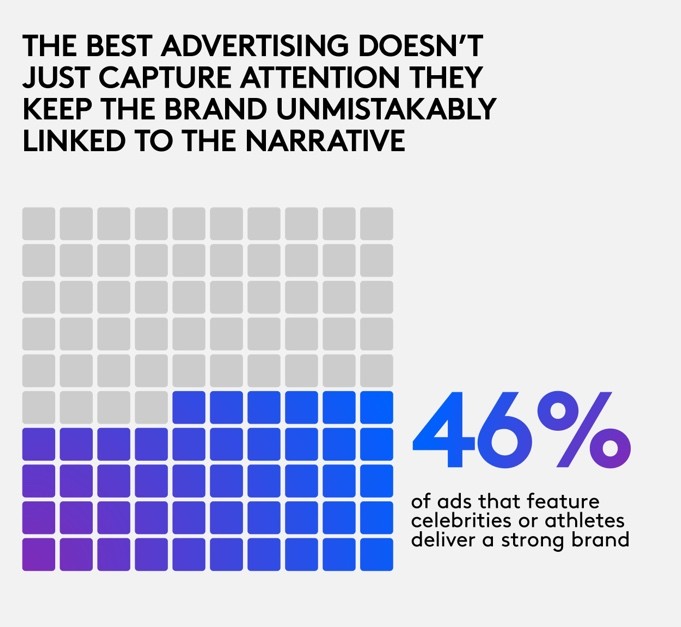
Celebrity involvement didn’t fix the problem either. Fewer than half of World Cup ads featuring celebrities delivered strong branding alongside the star, which means most campaigns that paid for fame failed to connect that fame to a brand. David Beckham alone appeared in World Cup-adjacent campaigns for at least 11 brands. At that volume, the association attaches to Beckham, not to any one brand alone.
The beer category showed how to get this balance right.
Coors transformed Andrés Cantor's iconic "Gooooooaaaal!" call into "Cooooooors!", riding the growth of Spanish-language fandom with the brand name embedded in the idea itself. Michelob Ultra's Earned Stripes tied national pride to the brand's striped bottle so the branding and the story could not be separated. Stella Artois did it with one detail: Beckham as the only fan in the scene who doesn't spill his glass while celebrating a goal. That ad ranked in the top 27% for branding on the strength of a single deliberate choice.
What this means for your next event: To ensure your campaign drives impact and cuts through in a crowded field, make it both highly engaging and unmistakably linked to your brand. If the campaign rests on a celebrity, ask how many other brands that person is fronting this cycle before you sign.
Lesson 5: The tournament ends. The learning shouldn't.
The next spotlight is already on. Super Bowl LXI, the 2027 FIFA Women's World Cup and LA28 will each bring their own storylines, their own rights packages and their own promises of reach. The evidence from this tournament will hold across all three. Rights get you in. Activation, cultural relevance and disciplined execution of marketing fundamentals decide the outcome.
One thing to do this quarter rather than next year: put the post-event review into the campaign timeline before the media plan is signed. The winners of the next event will be the brands that understand that while the tournament may be over, the learning cycle is only beginning.
Want the full analysis behind these five lessons?
Download Kantar's complete 2026 FIFA World Cup marketing report, including brand-by-brand performance data, creative testing results and the methodology behind every figure.
Download the full analysis:
Coming in September: Kantar's Spotlight on Sports LinkedIn Live series, going inside the brands and campaigns shaping the next era of sports marketing. Follow Kantar on LinkedIn for details on the first session and how to register.