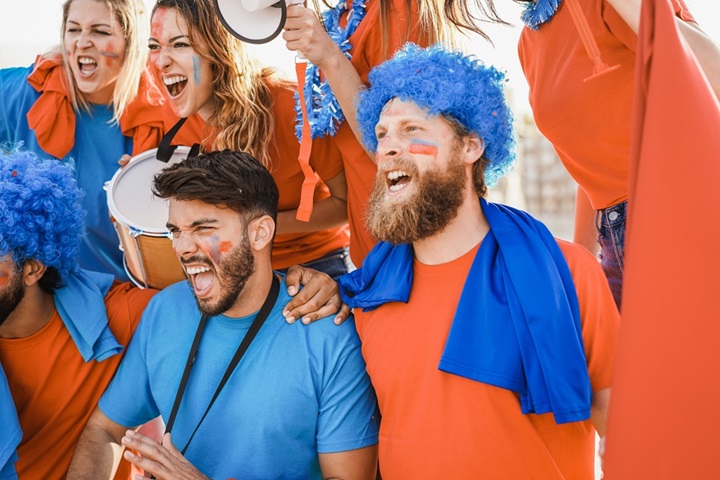
Sports have always brought people together, but for many fans, watching on TV or streaming just doesn’t cut it. Around the world, audiences are increasingly stepping out of their living rooms and into stadiums, arenas, and local venues. These “sports attenders” represent a dynamic and valuable audience, defined not just by what they watch, but by how they choose to experience it.
In Kantar’s Consumer Signals report, Connecting with Sports Fans, new insights reveal how global consumers attend sports events, what motivates them to show up in person, and how their behaviors differ from those who only watch from home. Based on more than 8,250 consumers across 11 markets, the research uncovers the growing importance of live sports experiences and what they mean for brands, teams, and organizers.
Who are the live sports attenders?
In the study, sports attenders are defined as those who attend live sports events in-person, whether regularly, occasionally, or rarely during a typical season. In fact, 80% of global consumers report attending sports events in person at least occasionally, highlighting just how widespread this behavior has become.
These fans span a wide spectrum, from dedicated “fanatics” who build their routines around live games, to more casual attendees who show up for major events or social occasions. What unites them is a willingness to go beyond passive viewing. For example, 61% of sports watchers also report attending events in-person, highlighting just how interconnected these behaviors have become.
The power of live experiences
Even in a world dominated by streaming and highlights, live events hold a unique appeal. The atmosphere, energy, and shared experience of being in a crowd are difficult to replicate elsewhere.
Professional venues (59%) remain the most popular setting for live attendance globally, reinforcing the continued draw of high-profile leagues and events. At the same time, local and community events also play an important role, offering more accessible opportunities for fans to engage in person.
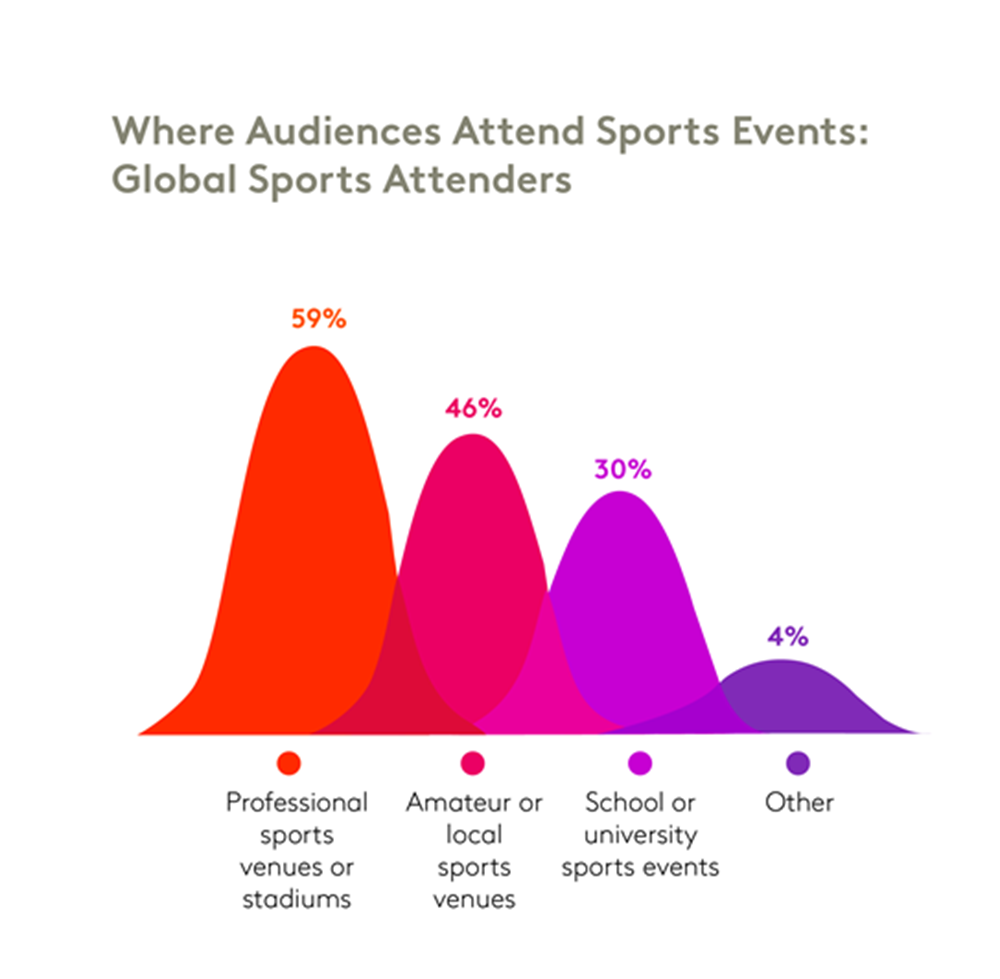
Sports fans residing in the US are more likely to attend school or university sports events (45%), compared to other countries like France (18%) and Australia (19%).
For many attenders, the experience extends beyond the game itself. Seventy percent say they plan to purchase food or beverages at their next live event, while one-third plan to buy team apparel or accessories on-site. This highlights the broader commercial ecosystem surrounding live sports and the opportunity for brands to connect with fans in the moment.
Commitment shows up in behavior
Attending a live sports event requires more planning, time, and financial investment than watching at home, and the data shows that attenders are willing to make that commitment.
Nearly two-thirds (64%) of attenders purchase tickets themselves, rather than relying on others, demonstrating a high level of intent and engagement. Many plan ahead as well, with ticket purchases most commonly made one to three months in advance (30%).
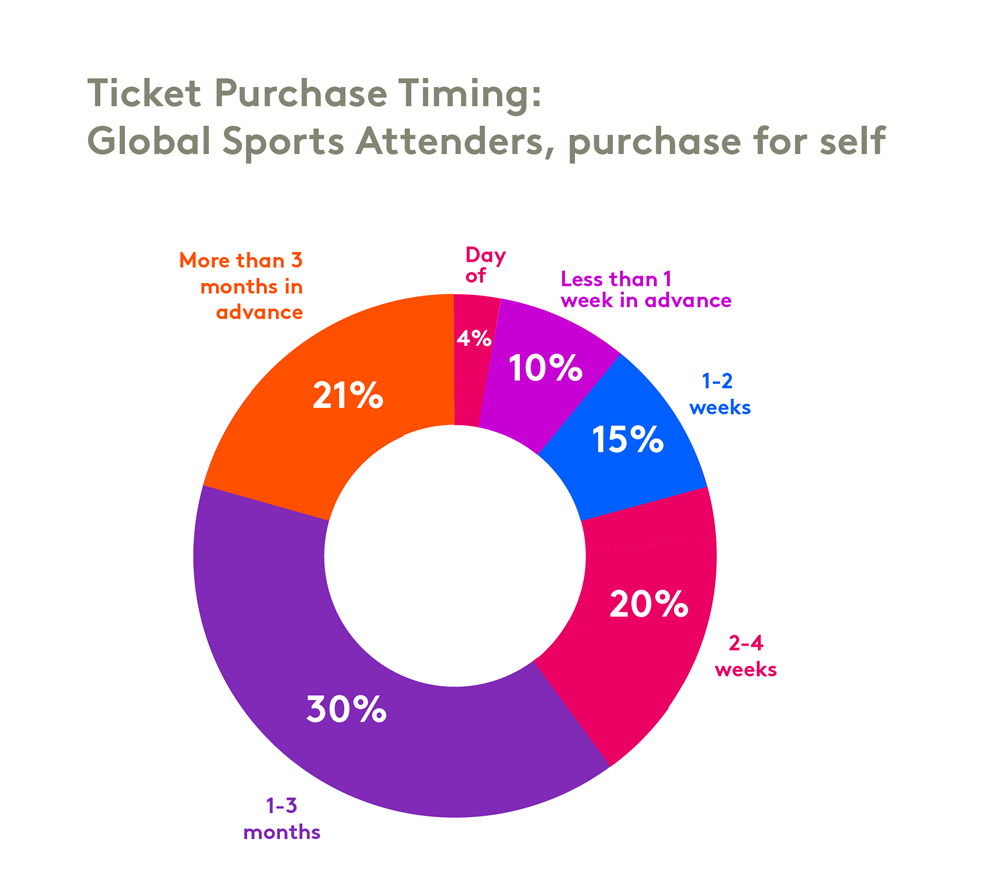
Many fans see live sports events as a planned experience rather than a last-minute or spontaneous activity, often factoring tickets into their budgets ahead of time.
Attenders are more engaged beyond the event
The impact of attendance extends beyond the stadium. Our study reveals that fans who attend live events are more engaged across multiple touchpoints in the sports ecosystem.
For example, 78% of sports attenders follow sports news, highlights, or analysis outside of live games, compared to 68% of those that watch sports on TV or streaming. They are also more likely to engage in monetized activities, such as placing online sports bets, further reinforcing their deeper involvement.
This increased engagement translates into stronger emotional connections as well. For many of these fans, sports are not just entertainment, they are part of identity, routine, and social life.
Profiling sports attenders with social media affinity data
To further profile live sports attenders and how they show up differently across digital and social environments, we linked survey responses with privacy-safe social affinity data from public social profiles and activity across major social platforms like TikTok, YouTube, Instagram, Reddit, Facebook, Twitch and more.
When we layer those signals onto survey responses, we start to get a richer picture of sports fans’ broader digital behavior.
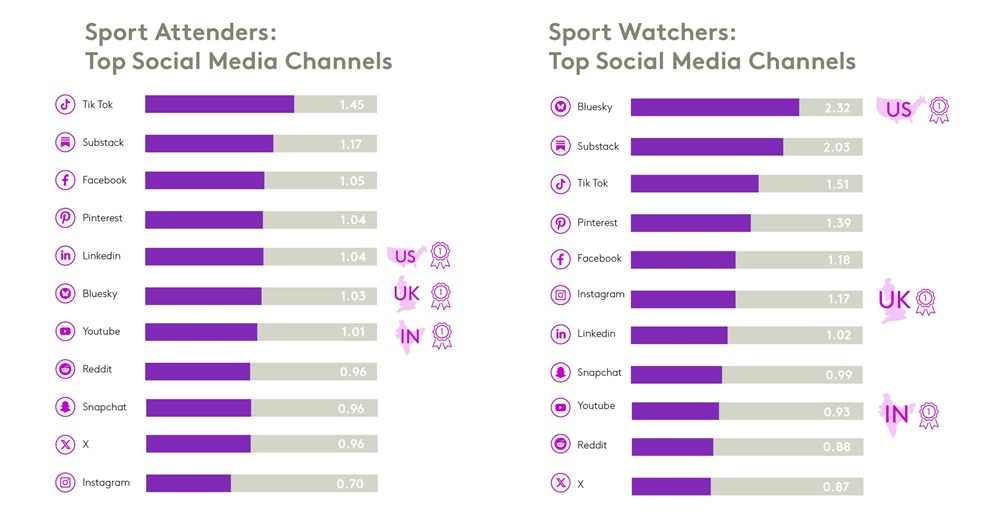
For example, attenders show strong affinity with platforms that support communities and are heavy on video content. These fans are more likely to engage with spaces where they can discuss games, follow teams closely, and interact with other supporters. Likelihood is not as high as sports TV or streaming watchers, so their presence on social channels is more average.
The chart below shows a global ranking of the most likely social media platforms sports attenders engage with where indexes great than 1.25 are significant:
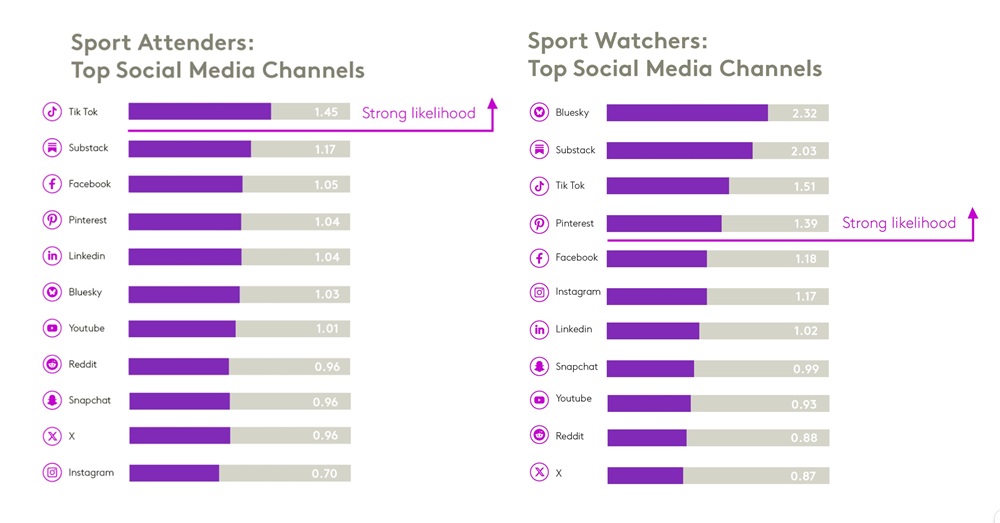
But another important takeaway is that these patterns don’t look the same everywhere. When we break the data down by country, the leading platforms shift significantly, showing that fan engagement behaviors are highly market-specific.
Among sports attenders, the top-indexing social platforms vary by region: LinkedIn leads in the US (1.04 index), Bluesky leads in the UK (1.03 index), and YouTube ranks highest in India (1.01 index). For audiences who primarily watch sports through TV or streaming, the picture shifts again, with Bluesky emerging as the top platform in the US and Instagram leading in the UK.
For brands, rights holders, and sponsors, this means media strategies can’t be one-size-fits-all. The platforms where sports fans gather (and how they engage on them) often vary by market.
When you combine survey insight with broader digital signals, you can move beyond simply knowing who sports fans are. You can start to understand where they spend their time, how they engage, and which channels are most relevant for reaching them. It gives brands the ability to identify how to best reach them and how to activate against them in a much more targeted way.
Are you interested in linking your own survey responses with social affinity data from public social profiles across major platforms? You can learn more about Kantar’s Connected Data Solutions here.
The future of fandom is in-person
While digital channels continue to expand access to sports content, they have not replaced the desire for live experiences. Instead, they are working alongside them, creating more informed, more engaged, and more motivated fans.
Sports attenders are at the center of this shift. They are turning sports from something to watch into something to experience, and in doing so, redefining what it means to be a fan.
These audiences are:
- More invested – They commit time and money to attend events in-person
- More engaged – They interact with sports content beyond the game itself
- More open to experiences – From food and merchandise to travel and hospitality
For brands, this opens up new ways to connect. Live events offer a unique environment where fans are already emotionally engaged and open to interaction. From in-venue activations to partnerships and premium experiences, the opportunity lies in enhancing the live moment rather than interrupting it.
Get more answers
For more findings from this study, access the full Connecting with Sports Fans report to explore how global consumers are watching and attending sports events, and how brands can play a role in the fan experience.
About this study
Using responses from more than 8,250 online respondents from Kantar Profiles’ Respondent Hub across 11 global markets (including Australia, Brazil, China, France, Germany, India, Japan, Saudi Arabia, Singapore, UK, and the US). All interviews were conducted online between March 3 and March 10, 2026 and collected based on local census age and gender distributions by country.