Few sporting events captivate the nation quite like the NCAA March Madness college basketball tournament. For three weeks each spring, millions of fans follow their brackets hoping to see an obscure program like Butler or Murray State upset a blue blood like Duke or Michigan. That possibility of the unexpected is what gives the tournament its distinctive appeal, and makes it one of the most powerful stages to send meaningful brand signals to consumers.
Yet last year’s tournament raised a new question. With elite programs dominating the bracket, and all eight No. 1 and No. 2 seeds advancing to the Sweet 16, could the era of Cinderella be fading?
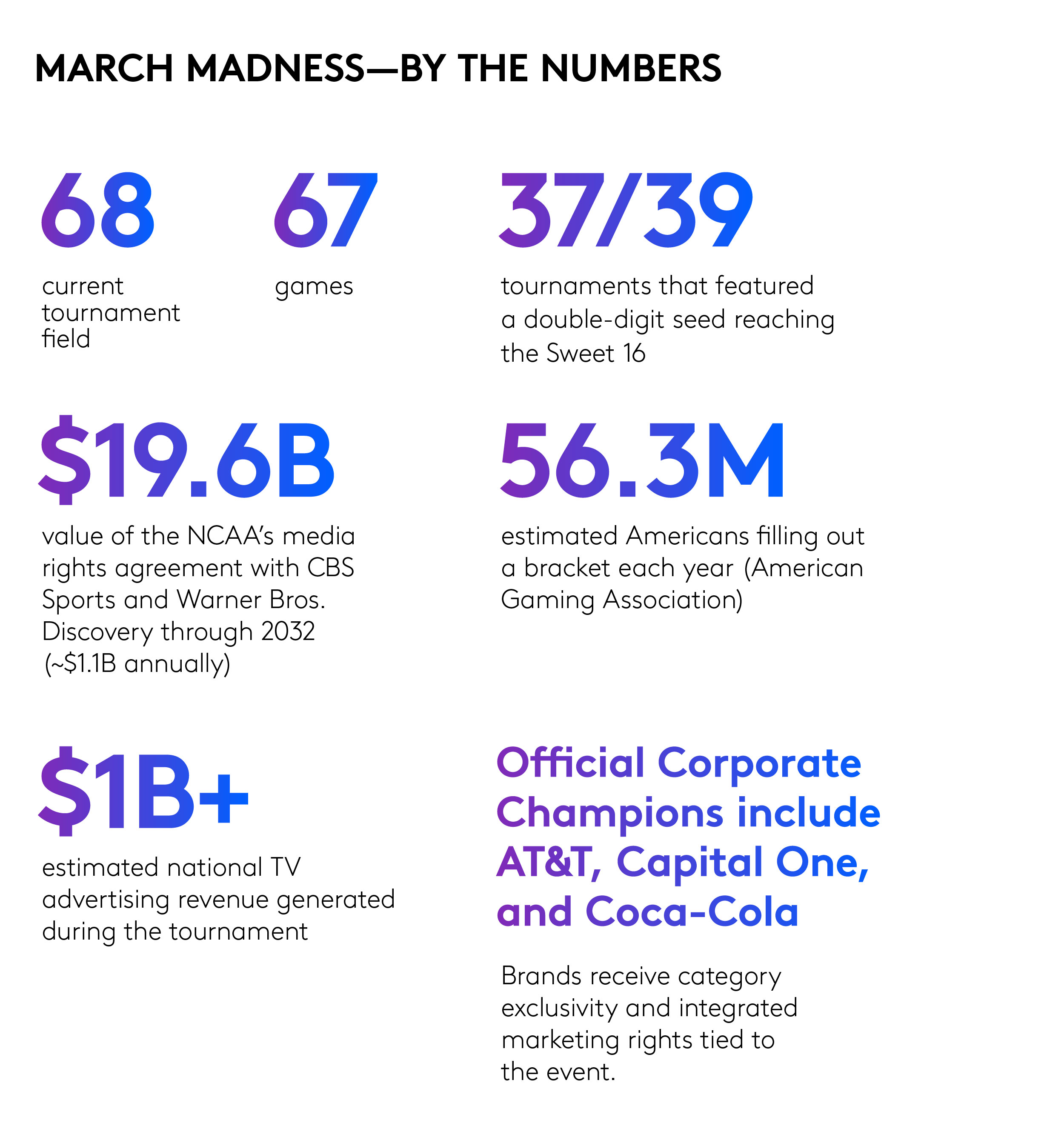
It’s a question with real implications for advertisers. March Madness sits at the center of a billion-dollar media and advertising business. The NCAA’s broadcast deal with CBS Sports and Warner Bros. Discovery averages about $1.1 billion annually through 2032, and national TV advertising tied to the tournament regularly exceeds $1 billion.
Much of that value is driven by the deep, enduring appeal of the underdog in sports.
It helps explain why fans tune in, and why the tournament holds special appeal for casual sports fans filling out brackets. Whether in fiction, like Rudy or Hoosiers, or in real life, like the U.S. hockey team’s “Miracle on Ice” victory at the 1980 Winter Olympics, audiences are drawn to the human drama of the unexpected miracle.
Kantar’s Sports MONITOR data makes the point clear. When NCAA basketball fans are asked which common sports stories feel most personally meaningful, the underdog victory stands alone at the top, outperforming every other classic sports narrative.
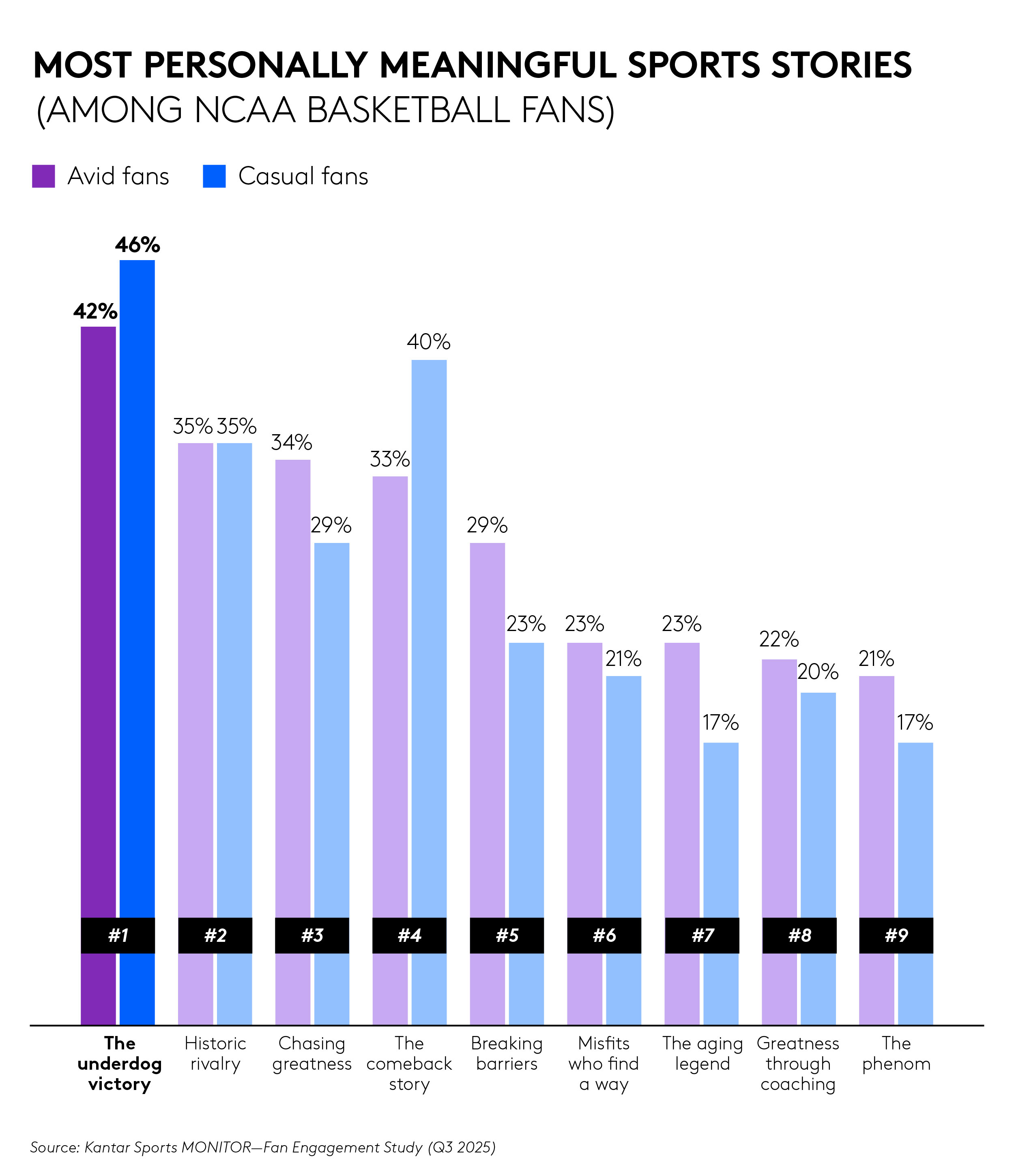
Just as important, the appeal of the underdog is broad. It resonates strongly with highly involved fans, but it is often even more powerful among lighter or less involved fans, the audiences who may not follow college basketball all season but tune in during March to see how the bracket unfolds. Rivalries and legacy narratives tend to reward existing fandom; Cinderella stories expand the audience.
March Madness is designed to produce those moments that matter, where meaning is created with the audience. The conditions of the tournament make surprises not just possible but likely, and buzzer beaters and improbable runs are part of what bring casual fans to the bracket every year.
And despite concerns that NIL and the transfer portal might erode the Cinderella story, the data suggests otherwise. Since the modern 64-team bracket began in 1985, a double-digit seed has reached the Sweet 16 in 37 of the last 39 tournaments. The structural ingredients that make March Madness compelling, and the underdog narratives that define it, remain firmly in place.
Niagara Bottling taps into the power of the underdog
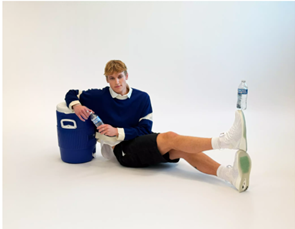
The opportunity isn't lost on brands willing to think outside the traditional sponsorship playbook. During last year’s tournament, Niagara Bottling signed an NIL deal with UCLA student manager Finn Barkenaes, believed to be the first national sponsorship of a college basketball “water boy.”
It worked because it fit the tournament. March Madness is built on unexpected contributors and unlikely moments, and the campaign leaned into that dynamic.
That kind of alignment has real impact. Kantar's BrandZ research shows that brands that create emotional connections are more likely to drive preference, reduce price sensitivity, and increase advocacy. Sports sponsorships tied to high-emotion moments send powerful brand signals, like a buzzer-beating upset or an improbable Final Four run, are among the most efficient drivers of that connection.
March Madness is one of the few environments where those emotions show up at scale. The brands that benefit aren’t just visible. They’re part of the story people are already invested in.
The bottom line
March Madness endures as one of the most powerful platforms in sports marketing precisely because it is built on a story everyone wants to believe in: the little guy can win. The data bears this out. Underdog narratives aren't just emotionally resonant, they are uniquely effective at expanding audiences beyond the core fan base, giving brands a rare opportunity to reach consumers who are leaning in, not just tuning out.