
Sports fans are everywhere, though just like with many things, no two fans are exactly alike. While one sports fan may choose to pay more to watch their favourite teams compete and adjust their schedules to accommodate games, others reserve their time for just the biggest championship events or seek opportunities to socialise with friends. Far from a one-size-fits-all experience, the factors that influence how a fan consumes sports are wide, and so are the ways they choose to express and experience their fandom.
In our Consumer Signals report, Connecting with Sports Fans from Kantar, new insights were shared into the ways global consumers watch and attend sports events. This report also delves into the levels of sports fandom across three distinct segments: Fanatics, Enthusiasts, and Casual Fans. These segments were developed based on the choices consumers make about how to spend their money, their viewing habits and the emotional motivators across more than 8,250 consumers from 11 countries to understand what influences the roles teams and brands play in the life of a sports fan. Additionally, this framework can be replicated in brand-specific research for sharper targeting.
Sports fanatics: A dedicated core
At the peak of this hierarchy sits the Sports Fanatic representing 55% of global consumers. For this group, fandom isn't just a hobby; it's a core component of their identity. These individuals are deeply immersed in sports culture. They are consuming live content multiple times a week, attend events in person, are willing to pay to ensure they have access to the matches that matter, and will often prioritise game schedules over personal routines. For Fanatics, the emotional stakes are high. The outcome of a game can dictate their mood for days following and 83% of Sports Fanatics consider their favourite team to be a part of their personal identity. This deep connection creates a loyal audience that is willing to invest in premium subscriptions and live experiences to stay connected to their teams.
Sports enthusiasts: The middle ground
Occupying the center of the spectrum and representing the middle ground, are Sports Enthusiasts representing 32% of global consumers. They are consistent sports fans who follow their favourite sports with interest, yet they maintain a healthy balance between sports and other life priorities. Their engagement is often social, characterised by weekly viewing or occasional live attendance with friends and family. While they may not seek out every niche broadcast or premium add-on, they are steady participators.
Casual fans: Situational engagers
Casual Fans, representing 13% of global consumers, are big on situational engagement. Their interaction is often tied to major cultural moments and opportunities to socialise with friends and family rather than the day-to-day grind of a season. Casual fans are likely to consume sports in social environments like bars or restaurants. While their individual investment is lower, Casual Fans are still watching and attending the sports events across the globe.
Sports fans: Who are they?
While general sports interest and consumption is a common similarity across many people, the levels of dedication varies by demographics. Results from the research show that men are more likely to associate with Fanatics (61% vs 50% for women), while women more often take a casual (16% vs 9% for men) approach to sports.
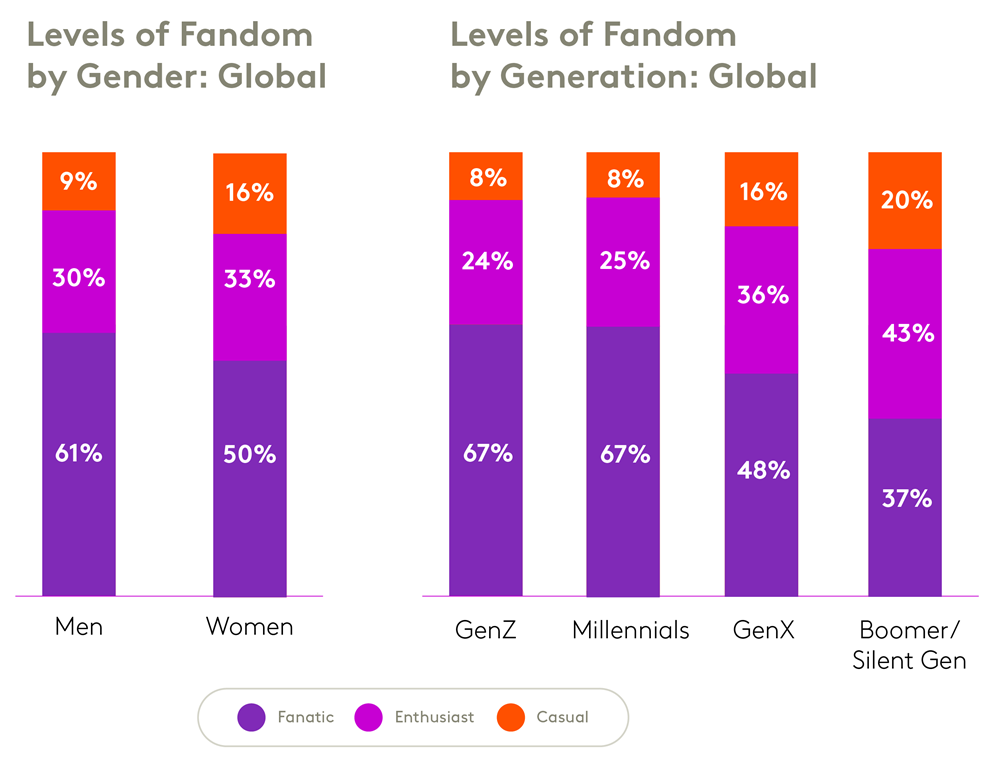
Younger generations, Gen Z and Millennials, are also most likely to fall in the Fanatic category, signaling a connection between age, disposable income and family status with the desire to be strongly dedicated to supporting a team.
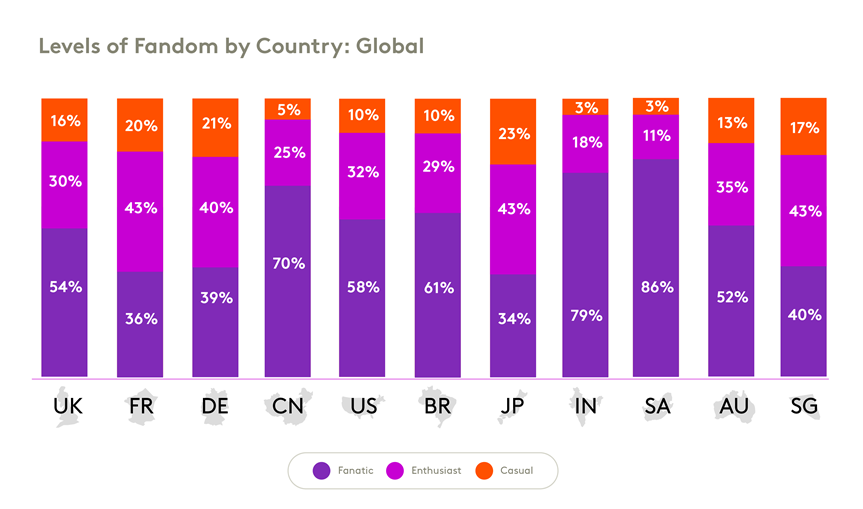
By country, the proportion of Fanatics are heaviest in countries like China, India and Saudi Arabia while fans in countries like Japan, Germany and France identify with a more casual approach.
How sports fans watch and pay to attend games
One defining characteristic of how these sports fans are grouped is the ways they choose to watch and attend sports events. 78% of Fanatics usually purchase their own tickets for events, likely to have control over the events and games they want to attend, compared to casual fans who typically attend live events when prompted by a special occasion or free ticket, or make impulsive purchases day-of.
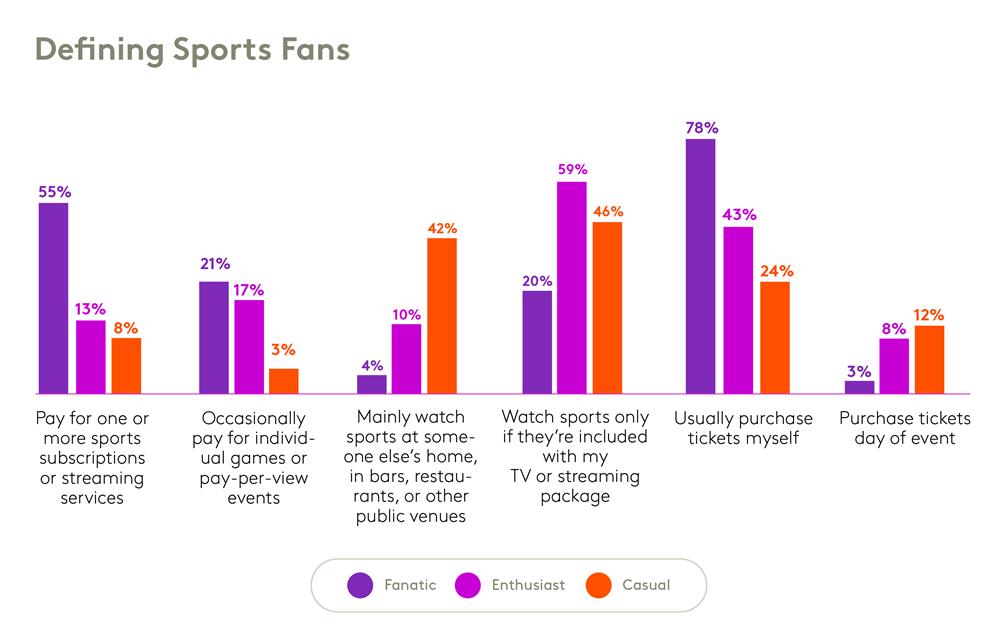
When it comes to watching sports at home, Fanatics are willing to pay to ensure they can watch what they want, when they want it. 55% of Fanatics report paying for at least one sports subscription or specialty streaming service, compared to only 13% of Enthusiasts and 8% of Casual Fans. Enthusiasts are engaging with sports, but at a lower level – 59% say they watch sports when they’re included in their standard TV or streaming package, the highest across all fan groups. Casual Fans prefer to watch in social settings, 42% want to watch sports at someone else’s home or at a venue like a bar or restaurant.
Implications for brands and marketers
Distinguishing between these groups is a key to developing an effective strategy. Fanatics are the true influencers of the sports world; they don't just watch, they amplify. Their willingness to spend extends beyond the screen, as they are the most likely group to reduce other discretionary spending to afford travel and tickets for major tournaments. This prioritisation underscores a level of brand loyalty that is rare in other industries.
While Casual Fans offer reach and Enthusiasts offer stability, it is the Fanatics who provide the depth and passion that sustain and lift up the sports economy. These superfans are a cornerstone of sports culture who are also most willing to open their wallets to support the teams they love.
Get more answers
For more findings from this study, access the complete Connecting with Sports Fans report. Find additional insights into how global consumers are watching and attending sports events, their motivators and the role brands play in the fan experience.
About this study
Using responses from more than 8,250 online respondents from Kantar Profiles’ Respondent Hub across 11 global markets (including Australia, Brazil, China, France, Germany, India, Japan, Saudi Arabia, Singapore, UK, and the US). All interviews were conducted as online self-completion and collected based on controlled quotas evenly distributed between generations and gender by country.