
For many sports fans, watching a game is more than just getting to the final score. The atmosphere, energy and shared experience with others is an important part of sports events for many fans. Even as streaming at home becomes easier, fans still flock to pubs and restaurants to watch live sports. From packed football Sundays to buzzer-beating playoff moments, watching at a pub or restaurant brings the fan experience closer to cheering from the stands in a community-driven environment.
In our Consumer Signals report, Connecting with Sports Fans from Kantar, new insights were shared into the ways global consumers watch and attend sports events. Delving into areas like identifying varying levels of sports fandom and how fans choose to travel to attend sports events, the research also examined the role of pubs and restaurants in sports viewing. Based on more than 8,250 consumers from 11 countries, the research sets out to understand what influences the choices consumers make as they watch sports.
Social hubs: The mainstream appeal of venues
When asked about how they watch sports events, nearly one-third of global sports viewers report watching games at a pub, bar or restaurant. Even more popular among younger audiences, Gen Z in particular is especially likely to watch sports outside the home. Twenty-three percent head to pubs and 21% to restaurants to catch games – more compared to older generations.
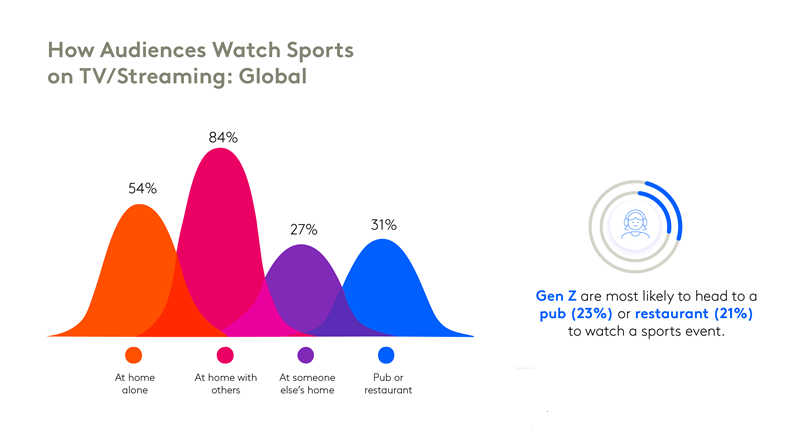
For restaurants and pub brands, this signals a generational shift: live sports have become increasingly social, mobile, and tied to food and beverage occasions.
Fan segments: Who is watching out-of-home?
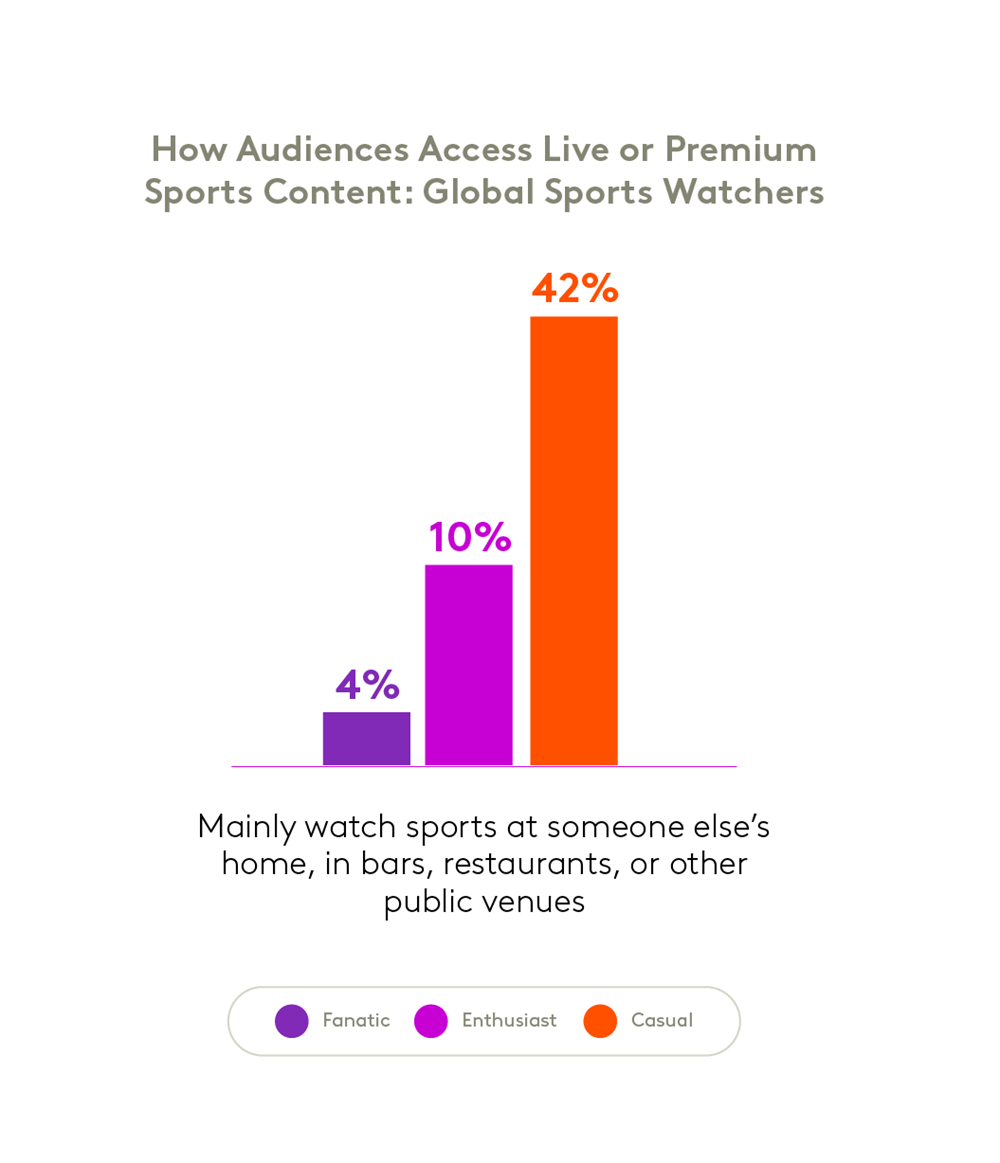
This behaviour is also closely linked to fan type. Casual Fans are most likely to watch sports events outside their home, including pubs or restaurants (42%). This sports-fan segment is motivated by treating games as social events and prefer to seek out communal environments and watch in places where they can easily high-five their fellow fans.
Atmosphere: The decision maker
When fans go out, expectations are high. Atmosphere (50%) is the single most important factor when choosing a venue to watch sports, outweighing both convenience (44%) and price (43%).
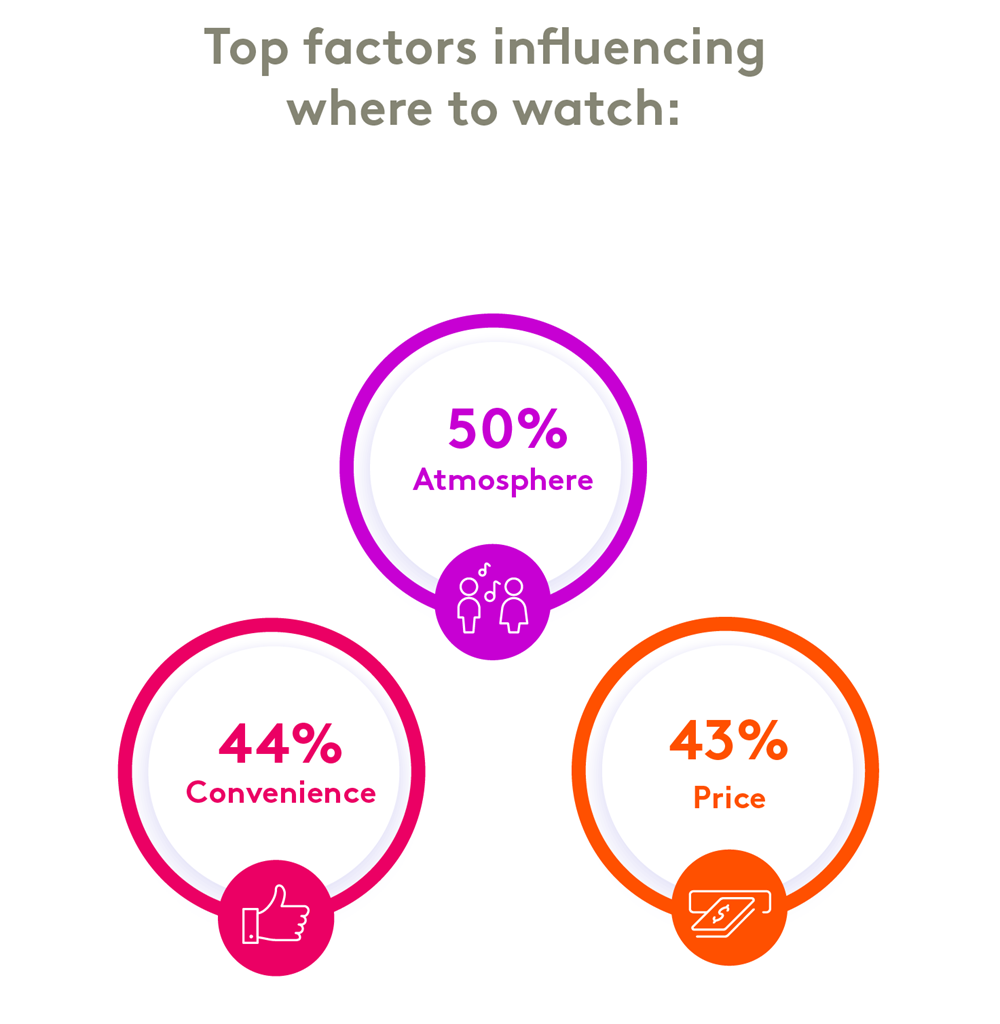
Fans aren’t just looking for a big screen. Whether a tentpole event or an away game, sports fans are seeking the energy, crowd engagement, and a shared environment that mimics an in-game experience.
In-person opportunities unlocked
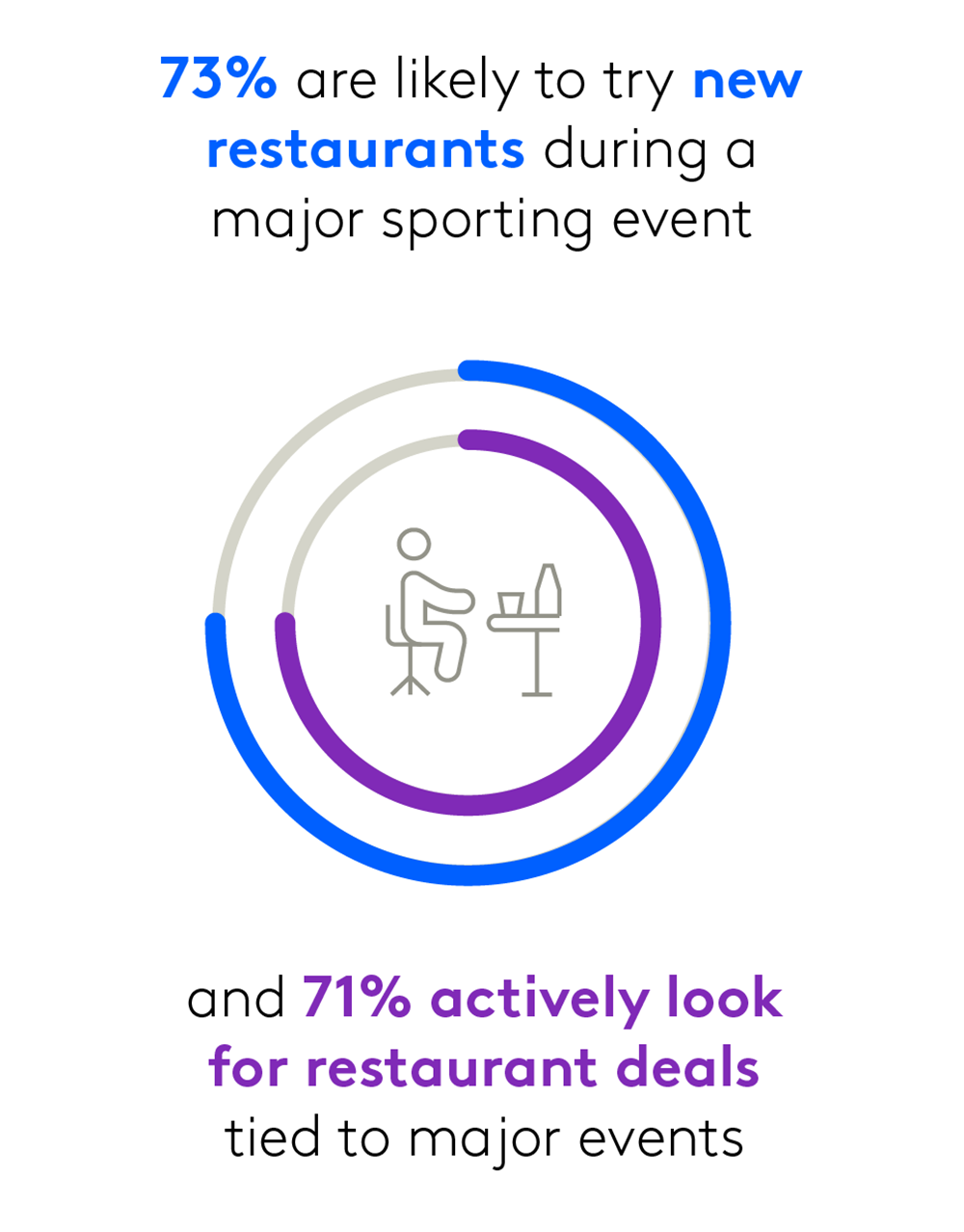
There’s also a strong behavioural upside tied to major sporting events. The report shows that 73% of consumers are willing to try new restaurants during major sports events, and 71% actively seek out deals tied to those events. With the right combination of atmosphere, food and drink specials, sports fans are open to expanding beyond their neighborhood watering hole.
Critically, fans also perceive value differently in relation to sports events. Three in four sports watchers say that watching a game at a pub or restaurant is “worth the extra cost.” That willingness to spend reflects the experiential premium of watching live sports events outside the home. For restaurant brands, this opens the door to experiment with bundled offers, premium menu items, and game-day exclusives that tap into sports fan communities.
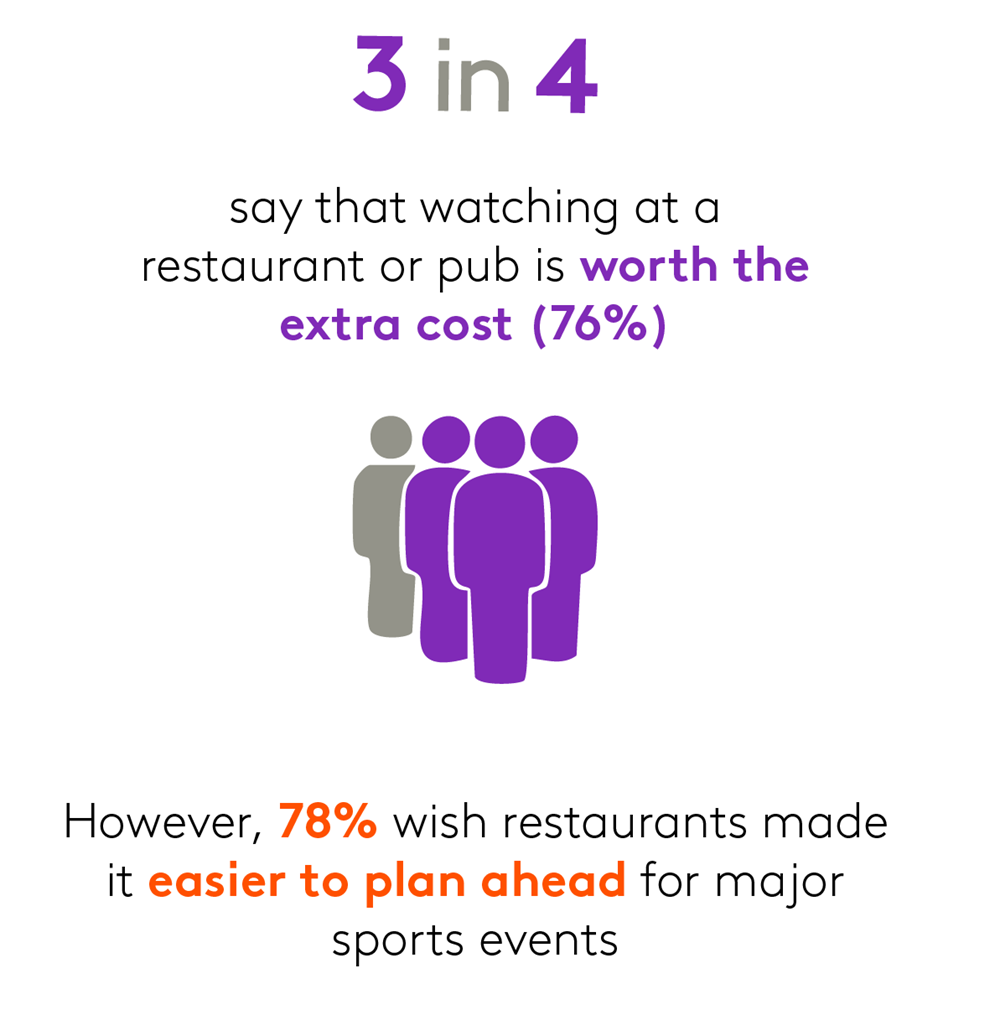
At the same time, there are clear friction points. 78% of sports fans say they would go out more often if it were easier to plan ahead for major events. Barriers like discoverability, group reservations, and event-specific promotions could be overtaken with improved integrations like real-time promotions tied to game schedules and live events.
Ultimately, sports viewing isn’t confined to the couch or limited to the bleachers. Live sports bring people together. When fans can’t make it in person, watching with friends and other fans in a social setting is their next best bet. As restaurant brands strategically plan their marketing strategies, the opportunity isn’t just to show up as an advertiser during a game or event, it’s to be a part of where the game happens.
Get more answers
For more findings from this study, access the complete Connecting with Sports Fans report. Find additional insights into how sports fans are defined, how consumers choose to travel for sports and how global consumers are watching and attending sports events.
About this study
Using responses from more than 8,250 online respondents from Kantar Profiles’ Respondent Hub across 11 global markets (including Australia, Brazil, China, France, Germany, India, Japan, Saudi Arabia, Singapore, UK, and the US). All interviews were conducted as online self-completion and collected based on controlled quotas evenly distributed between generations and gender by country.