
How the LEGO brand built a timeless play ecosystem
In 1949, Ole Kirk Christiansen created the Automatic Binding Brick, the precursor to today's familiar LEGO brick. Initially lacking stability, it took almost a decade before the stud-and-tube coupling system allowed the product to live up to its name. This coupling system created a firm foundation for the ‘LEGO System in Play', the brainchild of Ole's son, Godtfred, who recognised that the bricks could inspire kids' creativity and imagination through a cohesive system.
The LEGO brand's enduring fascination is founded on the inherent flexibility of its component pieces: each brick fits together seamlessly, creating seemingly endless combinations. A brick created in 2025 fits perfectly with one made in 1958, encouraging continuous collection and inspiring intergenerational appeal. While tech giants like Apple, Amazon and Microsoft are celebrated for their ecosystems, the LEGO brand's ‘System in Play’ predates them all conceptually in creating a cohesive user experience at scale.
How the LEGO brand stays on top
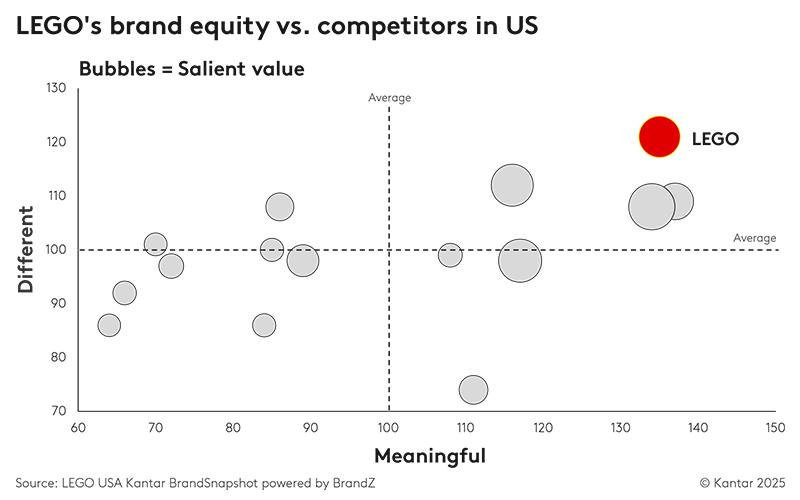
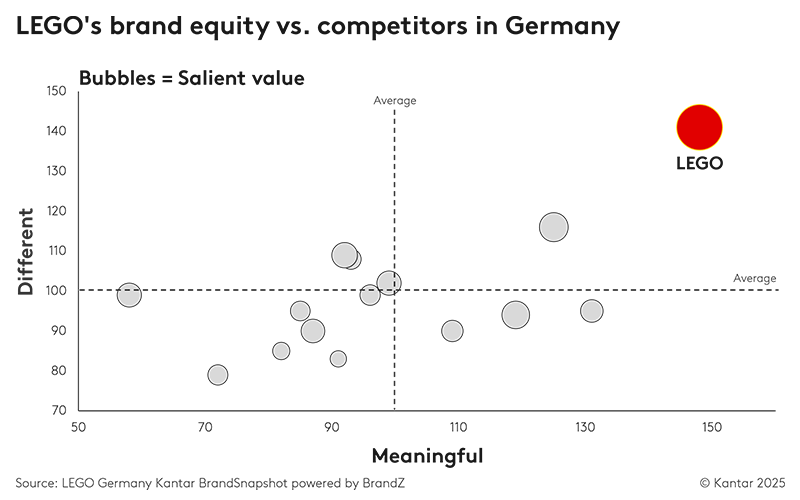
While other toys, like Barbie, have also stood the test of time, the LEGO brand remains pre-eminent. Based on responses from parents, Kantar BrandSnapshot powered by Kantar BrandZ finds that in the US, the LEGO brand is Meaningful, Different and Salient, a leader in the kids’ leisure time category, and better differentiated than any of its rivals. Its brand consideration rivals Nike and surpasses many modern-day brands such as Roblox and Fortnite. In Germany, the LEGO brand’s position is even stronger, far outdistancing other much-loved brands such as Disney.
Turning a blip into brand resilience
When Ole first started creating wooden toys in 1932, he adopted the name ‘LEGO’ from the Danish phrase 'Leg godt' meaning 'play well.' He purchased Denmark's first plastic injection-moulding machine in 1947, and Godtfred led the development of the interlocking design that made the bricks successful.
However, vision does not necessarily span generations. By the early 2000s, The LEGO Group faced near-bankruptcy. In response to perceived competition from computers and digital games, it overdiversified too quickly into areas that strayed from its core into theme parks, clothing lines, and standalone video games. Jørgen Vig Knudstorp, now widely credited with its revival, implemented a radical turnaround strategy.
The comeback to core brand strengths
Knudstorp’s strategy took the LEGO brand back to its roots and core audience that had made it successful. Rather than replacing the plastic bricks, he focused on making them more appealing to kids. He streamlined operations and leveraged licensing partnerships with popular franchises.
The seeds of this rejuvenation were already in place. As far back as 1978, it had introduced minifigures, but in limited numbers. Then, in 1999, it licensed LEGO® Star Wars, adding new characters and storytelling opportunities. Strategic partnerships like these became a cornerstone of the turnaround, bringing iconic IPs such as LEGO® Harry Potter and LEGO® Marvel™ Super Heroes into the portfolio and fuelling demand. At the same time, the LEGO Group continued to develop homegrown themes like LEGO® Technic and LEGO® City, always tapping into kids’ passions and interests. This comeback strategy and commitment to core brand strengths transformed the LEGO brand from near-collapse into one of the world’s most valuable toy brands.
Keeping the magic of play alive
The sheer breadth of LEGO minifigures shines through in its latest holiday campaign, themed around rediscovering the magic of play. Set to a remix of Lionel Richie's Hello, a panoply of LEGO minifigures entices a young boy away from his phone to rediscover the joy of playing with LEGO bricks. With cameo appearances from fan favourites and memorable lines like, "In my dreams, you stepped on me a thousand times!", the video evokes the essence of what the brand offers and ends by asking, "Is it play you're looking for?"
This latest holiday campaign doesn’t just entertain; it underscores the strength of its branding and its clear difference from other leisure brands, a point consistently confirmed in Kantar’s research with parents and kids.
If you’re unable to see the video above, please accept our website cookies or visit YouTube to watch the video
So, what can other brands learn from the LEGO brand's success?
Kantar's Blueprint for Brand Growth offers marketers a clear guide to accelerating brand growth through three fundamental principles: Predispose More People to Buy, Be More Present, and Find New Space. The LEGO brand's success reflects all three.
Predispose More People to Buy
By making its brand Meaningful and Different, the LEGO brand not only encourages more people to buy but also reinforces their willingness to pay the asking price. From the start, since Ole Christiansen created the name ‘LEGO’, it focused on inspiring play that was more than a mindless pastime. Despite the rise of video games, social media, and toy drones, the evidence shows parents still love the creativity that comes with playing with LEGO bricks and it continues to stand out from other brands. All brands must have an innate understanding of the value they add to people's lives, recognising not just functional benefits but the emotional ones that make them Meaningful and Different to potential buyers.
Be More Present
Brands must be salient to people who might buy them, so that they come readily to mind when people are ready to buy. In both the US and Germany, the LEGO brand’s high Salience means it readily captures the demand created by being Meaningful and Different in the minds of potential buyers. It continues to reinforce this Salience through ongoing activity, with the latest holiday campaign to keep it front-of-mind.
Find New Space
Established brands can only really achieve significant growth by expanding their footprint to new markets, be that a new consumer segment, a new category, or a new country. This is not a matter of abandoning what your brand stands for; it’s about finding new ways to express and leverage its fundamental appeal. The LEGO brand regained its growth curve once it found new ways of extending its appeal. By leveraging the power of popular culture unique to the LEGO brand, and extending its reach to adults with complex, premium sets like Titanic or Rivendell, it continues to harness fan enthusiasm to inspire new product ideas. The LEGO® Botanicals Collection is a strong example of this approach, attracting new builders and broadening appeal among teenagers and adults through its diverse portfolio.
Building, brick by brick, on strong foundations
The LEGO brand's success today is far from accidental. It reflects a commitment to imaginative play that has spanned decades, and that is the most important lesson any marketer can draw from the LEGO brand. While markets evolve and consumer behaviours shift, the core principles that have made your brand successful often remain the bedrock for its future growth.
Discover insights to help shape your brand’s future in the 20th anniversary edition of BrandZ’s Global Report now available at www.kantar.com/campaigns/brandz/global
Kantar BrandSnapshot is a free interactive tool powered by BrandZ’s wealth of data and validated Meaningful Different and Salient framework. Designed to give you a complete picture of brand equity in competitive context, BrandSnapshot delivers insights on over 15,000 brands in 40+ markets.
Ready to strengthen the building blocks of your brand equity? Explore BrandSnapshot on Kantar Marketplace for free today.